
The 10 Best Castles in Japan (and How to Visit Them)

Updated: Feb 10

Japan is famous for its rich history, shaped by centuries of regional kingdoms, powerful samurai clans, and long periods of isolation from the outside world. One of the most iconic ways to experience that history today is through Japan’s castles.
With their towering keeps, intricate wooden interiors, stone ramparts, and peaceful grounds, Japanese castles offer a window into the country’s feudal past.
Only 12 original castles still remain standing in Japan, while more than 100 others have been carefully rebuilt as replicas over the years. In this guide, we highlight the top 10 castles in Japan, what makes each one worth visiting, and how you can experience many of them through Global Family Travels.
10. Kochi Castle - One of Japan’s Best Original Castles in Shikoku

Located in the heart of Kochi City on Shikoku Island, Kochi Castle is one of Japan’s rare surviving original castles — and one of only four original castles still standing on Shikoku.
What makes Kochi Castle truly special is that it’s the only castle in Japan where both the main keep and the Honmaru Palace (the lord’s residence) remain preserved together. Visitors can explore not only the defensive structure, but also the living quarters where feudal leaders once governed.
Highlights include:
Original wooden interiors
Hilltop views and stone masonry
A preserved palace alongside the keep
And after your visit? Kochi’s famous Hirome Market is just minutes away — the perfect place to try katsuo no tataki (seared bonito), the region’s signature dish.
Kochi Castle is included in Global Family Travels’ Immerse in Shikoku Program, as part of a guided day exploring one of Japan’s least-visited prefectures.
9. Uwajima Castle - Southernmost Original Castle in Shikoku, Japan

Tucked away in southwest Ehime Prefecture, Uwajima Castle is the southernmost original castle still standing in Japan — and one of the hardest to reach without a Shikoku-focused itinerary.
Its small hilltop keep has been transformed into a museum dedicated to the powerful lords who once ruled the region, while still maintaining much of its original architecture.
Nearby, travelers can also visit:
Ryuko-in Temple
Tensha-en Garden
Uwajima Castle is part of GFT’s Immersive Shikoku Program, where guests enjoy a specially guided afternoon through all three sites.
8. Nijo Castle - Historic Samurai Castle in Kyoto, Japan
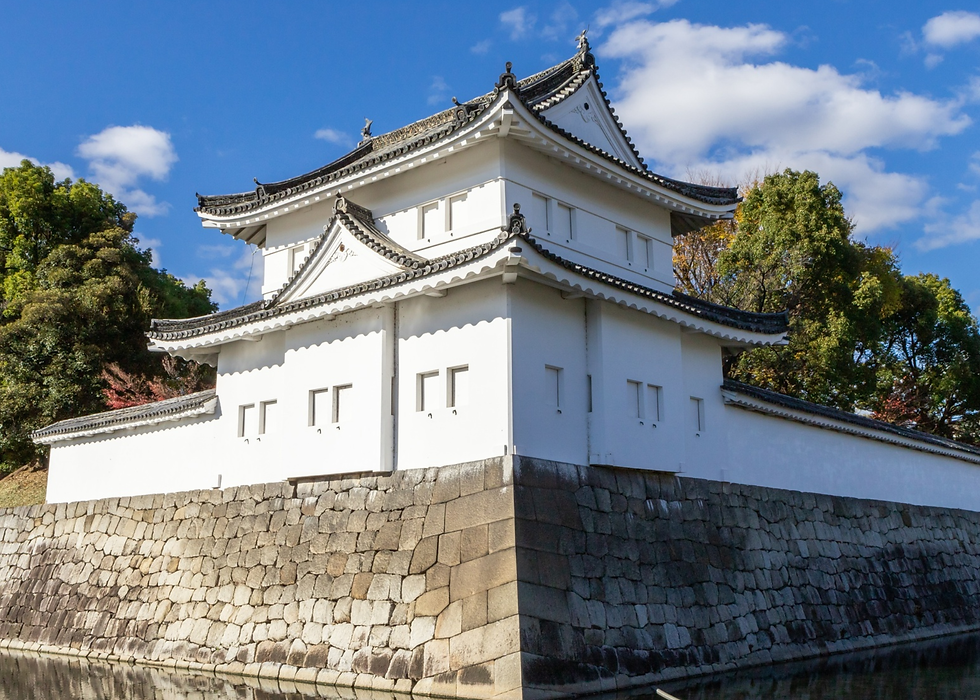
Unlike many castles on this list, Nijo Castle doesn’t feature a dramatic hilltop keep — but it remains one of the most fascinating historic sites in Kyoto.
Built as the residence of the Tokugawa shoguns, Nijo-jo is known for its elegant palaces, tranquil gardens, and visitor-friendly layout.
Inside the grounds you’ll find:
The Ninomaru Palace
The Honmaru Palace
Beautiful landscaped gardens
Cafes and cultural spaces nearby
Nijo Castle is a wonderful introduction to Japan’s castle culture and is included early in the GFT Shikoku itinerary.
7. Hikone Castle - Overlooked Original Castle Near Kyoto, Japan (Lake Biwa)

Just one hour north of Kyoto, Hikone Castle is an original castle overlooking the eastern shore of Lake Biwa.
Because Kyoto is filled with famous temples and landmarks, Hikone is often overlooked — but it’s one of the best castle stops for travelers moving between Tokyo and Kansai.
Why visit Hikone Castle?
One of Japan’s best-preserved original keeps
Stunning cherry blossom views in spring
Overlooks the peaceful Genkyu-en Garden
It’s also a convenient stop for JR Rail Pass travelers, since nearby Maibara Station is served by major Shinkansen routes.
6. Bicchu-Matsuyama Castle (Okayama) - Japan’s Highest Mountain Castle

Perched high in the mountains of Okayama Prefecture, Bicchu-Matsuyama Castle is famous for being the highest castle in Japan, sitting 430 meters above sea level.
The mountaintop location makes it one of the most dramatic castle settings in the country. In fact, one unforgettable experience here is the “sea of clouds” phenomenon, when mist surrounds the castle so that it appears to float above the mountains.
This castle is included in GFT’s Shikoku Japan Program, paired with a visit to the beautifully preserved Fukiya Furusato Village.
5. Kumamoto Castle (Kyushu) – One of Japan’s Three Great Castles

One of Japan’s “Three Great Castles,” Kumamoto Castle is renowned for its massive fortified complex and historical significance.
Originally built in the early 1600s, the castle famously withstood a siege during the Satsuma Rebellion led by Saigo Takamori.
While much of the keep has been reconstructed, the interior now houses a modern museum exploring the castle’s legacy.
Why Visit Kumamoto Castle:
Kumamoto Castle is an excellent stop for travelers heading deeper into Kyushu, toward Aso Volcano or Kagoshima.
4. Imabari Castle – Rare Seaside Castle in Japan

Built at a strategic maritime hub on the Seto Inland Sea, Imabari Castle is one of Japan’s most unique coastal fortresses.
Historically, its moats connected directly to the sea, allowing visitors to arrive by boat straight into the castle compound — a rare feature in Japanese castle design.
Today, highlights include:
Original stone walls and moats
A rebuilt keep with museum exhibits
Beautiful nighttime illumination
Best route to visit Imabari Castle:
Imabari is a fantastic stop between Matsuyama and Uwajima.
3. Matsumoto Castle (Nagano) – Iconic Black “Crow Castle” in Japan

Often called Japan’s “Crow Castle” for its striking black exterior, Matsumoto Castle is one of the country’s most treasured originals.
Completed in 1614, it remains one of Japan’s national treasures and offers visitors a fully preserved interior.
Climbing to the top floor rewards you with sweeping views of:
The castle grounds and moat
Matsumoto City
The Japanese Alps beyond
Best route to visit Matsumoto Castle:
Its location makes it a perfect detour for travelers heading toward the Nakasendo Trail or Nagano.
2. Matsuyama Castle - Largest Original Castle in Shikoku, Japan

Built atop Mt. Shiroyama in the center of Matsuyama City, Matsuyama Castle is the largest original castle remaining on Shikoku.
Accessible by foot or ropeway, it offers one of the best preserved examples of feudal architecture outside of Honshu.
Even better: it’s just a short tram ride from Dogo Onsen, one of Japan’s most famous hot spring destinations. Both the castle and hot springs are featured in Global Family Travels’ Shikoku Japan Program.
1. Himeji Castle (Hyogo) – Japan’s Most Famous UNESCO Castle

No list of Japan’s castles is complete without Himeji Castle, widely considered the most beautiful and best-preserved castle in the country.
Known as the “White Heron Castle,” Himeji is the largest original castle in Japan and a UNESCO World Heritage Site.
Visitors can explore:
The original keep and wooden stairways
Outer fortifications and defensive corridors
Panoramic views from the top floor
In cherry blossom season, the entire compound transforms into a sea of pink, making it one of Japan’s most iconic spring destinations.
Himeji Castle is included in GFT’s Shikoku Japan Program, alongside nearby Engyo-ji Temple on Mt. Shosha.
Experience Castles in Japan with Global Family Travels

Ready to explore Japan beyond the usual tourist routes?
Global Family Travels’ Immerse in Shikoku Japan Program includes several of the castles featured here, woven into a deeper journey of cultural immersion, history, and meaningful travel.
🏯 Discover Japan’s feudal past
🌸 Walk through castle towns and gardens
♨️ Pair historic exploration with local traditions like such as an onsen experience or stay in a Ryokan
Experience Japan’s castles in a way that’s personal, guided, and unforgettable!

Comments